
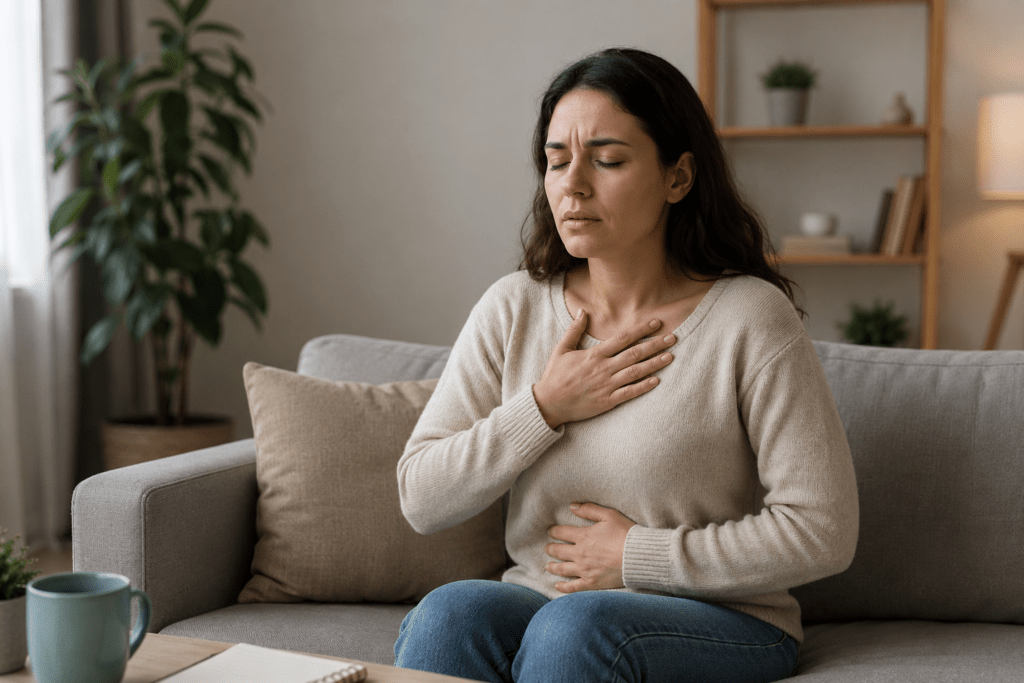
A Panic Attack can feel terrifying. One moment you’re fine, and the next your heart is racing, your chest feels tight, and your mind convinces you something is seriously wrong.
Many people describe it as feeling like they’re losing control or even having a heart attack. The good news? Panic attacks are treatable, and there are simple ways to calm yourself during the moment.
Knowing what to do can make a huge difference. With the right techniques and professional support, you can learn to manage panic symptoms and feel more in control of your mental health.
What Happens During a Panic Attack?
A Panic Attack is your body’s intense reaction to fear or stress, even when there’s no real danger around you. It activates the body’s “fight-or-flight” response, which is designed to protect you in emergencies.
The problem is that during a panic attack, your brain sounds the alarm too loudly.
Emotional Symptoms
You may experience:
- Intense fear or dread
- Feeling disconnected or out of control
- Fear of fainting, dying, or “going crazy”
- Sudden overwhelming anxiety
Physical Symptoms
Panic attacks can also cause:
- Rapid heartbeat
- Shortness of breath
- Sweating
- Chest tightness
- Shaking or dizziness
- Nausea or tingling sensations
These symptoms are real, but they are temporary. That’s an important thing to remember.
Immediate Steps to Calm a Panic Attack Quickly
When panic hits, your goal is not to “fight” the feeling. Instead, focus on calming your nervous system step by step.
1. Focus on Your Breathing
During a Panic Attack, breathing often becomes fast and shallow. This can make dizziness and chest tightness feel worse.
Try this simple breathing exercise:
- Inhale slowly through your nose for 4 seconds
- Hold your breath for 4 seconds
- Exhale gently for 6 seconds
Repeat this several times.
Think of it like pressing the “reset button” for your nervous system. Controlled breathing tells your brain that you are safe.
2. Ground Yourself Using the 5-4-3-2-1 Technique
This grounding method helps pull your mind away from fear and back into the present moment.
Try identifying:
- 5 things you can see
- 4 things you can touch
- 3 things you can hear
- 2 things you can smell
- 1 thing you can taste
It may sound simple, but it works surprisingly well. Your brain can’t fully focus on panic and sensory awareness at the same time.
3. Remind Yourself the Panic Attack Will Pass
A panic attack feels endless in the moment, but it does pass.
Use calming self-talk like:
- “I am safe.”
- “This feeling is temporary.”
- “My body is reacting to stress, not danger.”
Imagine your panic like a wave in the ocean. It rises, peaks, and eventually fades away.
4. Move to a Calm and Safe Space
If possible, step away from loud noises, crowds, or stressful surroundings.
Sit comfortably, relax your shoulders, and loosen tension in your jaw or hands. Even a quiet corner or your parked car can help your mind settle down.
5. Avoid Fighting the Panic
Here’s the tricky part: resisting panic often makes it stronger.
Instead of thinking, “I need this to stop right now,” try accepting the feeling without judgment.
It’s similar to quicksand — struggling too hard can make you sink deeper. Acceptance helps reduce the fear response faster.
Expert Mental Health Tips for Long-Term Relief
Quick calming techniques are helpful, but long-term recovery comes from understanding and managing your triggers.
Practice Stress Management Daily
Daily stress builds up quietly. Your nervous system needs regular care.
Helpful habits include:
- Meditation
- Yoga
- Relaxation exercises
- Journaling
- Spending time outdoors
Even 10 minutes a day can make a noticeable difference.
Identify Personal Panic Triggers
Some people experience Panic Attacks after:
- Lack of sleep
- Too much caffeine
- Work pressure
- Emotional stress
- Social anxiety
Keeping a journal can help you notice patterns and triggers over time.
Improve Lifestyle Habits
Mental health and physical health are deeply connected.
Focus on:
- A healthy sleep schedule
- Regular exercise
- Balanced meals
- Drinking enough water
- Reducing caffeine and alcohol intake
Skipping meals and surviving on coffee? Your anxious brain probably won’t appreciate that combo.
Consider Professional Therapy
Sometimes, self-help techniques aren’t enough — and that’s okay.
Professional treatment options may include:
- Cognitive Behavioral Therapy (CBT)
- Counseling and emotional support
- Psychiatric evaluation
- Medication when recommended by a specialist
Therapy can help you understand the root cause of panic and build healthier coping strategies.
When Should You Seek Professional Help?
It’s important to speak with a mental health professional if:
- Panic attacks happen frequently
- You avoid places or activities because of fear
- Anxiety affects your work, sleep, or relationships
- Symptoms feel severe or uncontrollable
Seeking help early can prevent panic symptoms from becoming more disruptive over time.
How Panic Attack Treatment in Dubai Can Help
Professional Panic Attack treatment in Dubai offers personalized support based on your symptoms and lifestyle.
Mental health specialists can help you identify triggers, manage anxiety, and create a treatment plan that works for you. Treatment may include therapy, stress management techniques, lifestyle guidance, and medication if necessary.
With the right support, recovery is absolutely possible.
Conclusion
A Panic Attack can feel frightening, intense, and overwhelming, but it does not define you.
Simple calming techniques like deep breathing, grounding exercises, and positive self-talk can help you regain control during difficult moments.
More importantly, long-term healing is possible with proper mental health care and support. If panic attacks are affecting your daily life, don’t hesitate to reach out for professional help. Taking that first step could change everything.